
WELCOME BONUS 300%
UP TO €2000 + 100
FREE SPINS
UP TO €2000 + 100
FREE SPINS
Home → Roulette
Roulette at Mafia Casino
37 Pockets vs. 38 Pockets: The Difference
The European variant utilizes a wheel with 37 pockets, comprising numbers one through thirty-six and a single zero sector. This configuration establishes a house edge of 2.70 percent, which is significantly lower than the 5.26 percent edge found on wheels featuring double zeros. Players betting on outside options like red or black face identical payout ratios of 1:1 across both formats, but the probability of winning differs due to the extra losing pocket.
American roulette introduces a second green slot marked with double zeros, expanding the total sectors to thirty-eight. This additional pocket doubles the house advantage from 2.70 percent to 5.26 percent without altering any internal payout structures such as the straight bet returning 35:1. Consequently, the theoretical return to player drops from 97.30 percent in the European version to 94.74 percent in the American layout.
A specific wager known as the Five Number Bet covers the sequence zero, double zero, one, two, and three on the American wheel. This unique combination carries an RTP of 92.11 percent and a house edge of 7.89 percent, making it the most unfavorable option available at the table. No equivalent bet exists for the European wheel, where all wagers maintain the standard 2.70 percent edge.
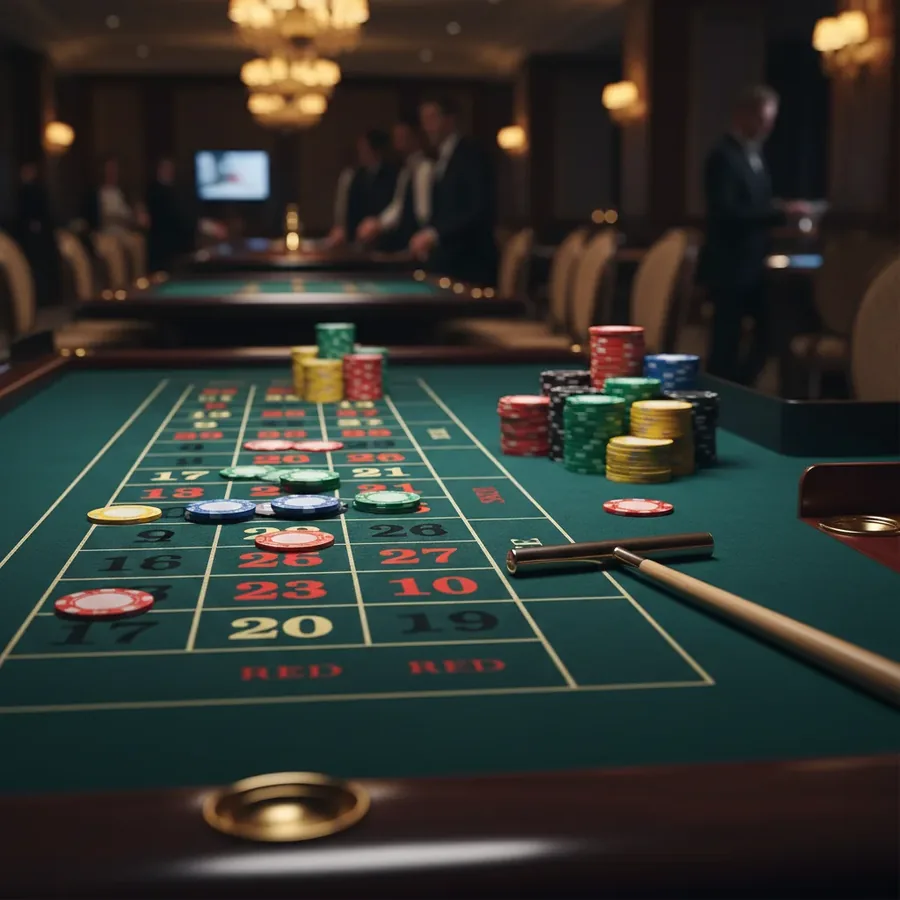
Error: Using Opposite Bets for Wagering Fulfillment
Table games contribute only 10 percent toward the fulfillment of the 40x wagering requirement attached to the welcome bonus. Attempting to neutralize risk by placing simultaneous opposite bets on even-money options like red and black fails to generate the necessary turnover volume efficiently. Each spin results in a net loss of one unit while adding only a fraction of that amount to the required playthrough total.
The casino offers a 300 percent match up to €2,000 plus 100 free spins upon initial deposit, subject to strict contribution rules. Since roulette counts minimally toward these conditions, players must wager substantially more money to clear the bonus compared to slots. A strategy relying on hedging bets accelerates bankroll depletion without satisfying the contractual obligations of the promotion.
La Partage rules on French tables refund half the stake when zero appears on even-money wagers, technically reducing the immediate loss per spin. However, this mechanism does not exempt the game from the 10 percent contribution rate mandated by the operator. The mathematical expectation remains negative, and the slow accumulation of wagering credits makes this approach inefficient for converting bonus funds into withdrawable cash.
Calculate Payout: Corner 8:1 Plus Bet
A corner bet targets four adjacent numbers on the layout grid and pays out at odds of 8:1 when successful. This wager requires placing chips on the intersecting line separating the selected quadrants of the roulette board. The probability of hitting the correct four-number combination is calculated as four favorable outcomes divided by the total number of pockets on the wheel.
On the European wheel with 37 pockets, the probability of winning a corner bet is approximately 10.81 percent. Multiplying this probability by the 8:1 payout reveals a theoretical return slightly below the base RTP of 97.30 percent due to the uniform distribution of the house edge. The same 8:1 payout applies to the American wheel, but the increased denominator of 38 pockets lowers the actual win frequency to roughly 10.53 percent.
Lightning Roulette by Evolution retains the standard 8:1 payout for corner bets on the main board while offering multipliers up to 500x on direct numbers. These multipliers apply exclusively to straight bets and do not enhance the returns for corner or other split wagers. Players seeking higher variance must adjust their strategy to include direct number bets alongside traditional corner placements to capitalize on the lightning features.
House Edge 2.70 Percent in One Number
Betting on a single number in European roulette yields a payout of 35:1 against a true probability of 1 in 37. This discrepancy between the offered odds and the actual statistical likelihood generates the consistent 2.70 percent house edge across all bet types. The payout structure ensures that long-term losses align precisely with this percentage regardless of the specific number chosen by the player.
Straight bets on individual digits share the same mathematical disadvantage as column or dozen bets, despite appearing riskier to novice players. The 35:1 compensation for a single number win is designed to offset the low hit rate, resulting in an identical 2.70 percent advantage for the casino. This uniformity prevents any strategic variation in bet selection from altering the expected value over time.
Mega Fire Blaze Roulette Live by Playtech maintains the standard 2.70 percent edge for basic straight bets while introducing bonus features. The game allows stakes ranging from €0.10 to €5,000 EUR, accommodating both casual players and high rollers within the same framework. The base RTP remains stable at 97.30 percent, ensuring that the fundamental mathematics of the single number bet remain unchanged despite the added visual effects.
How Long for 40x Wager with 10 Percent?
The welcome bonus provides a maximum match of €2,000, requiring a total turnover of €80,000 to satisfy the 40x wagering condition. Because roulette contributes only 10 percent to this requirement, players must actually wager €800,000 in real money to clear the bonus fully. This massive volume transforms a seemingly modest promotional offer into a significant financial commitment for the participant.
Calculating the time investment depends heavily on the average bet size and the speed of the dealer at live tables. Playing Quantum Roulette with minimum bets of €0.10 requires millions of spins to reach the necessary threshold, likely spanning many weeks of continuous play. The contribution rate effectively multiplies the effort required compared to playing slots, which often contribute 100 percent to the same goal.
Withdrawal eligibility hinges on completing this extensive turnover before requesting any funds derived from the bonus balance. Failure to meet the €800,000 wagering target results in the forfeiture of both the bonus amount and any winnings generated during the playthrough period. Players should carefully assess their bankroll and time availability before accepting the 300 percent match to avoid unintended financial exposure.
Roulette bet types at a glance
| Bet | Payout | Win Chance | Numbers Covered | House Edge |
|---|---|---|---|---|
| Roulette Europäisch (einfache Null, 37 Sektoren) | Straight 35:1, Split 17:1, Street 11:1, Corner 8:1, Six Line 5:1, Dozen 2:1, Column 2:1, Rot/Schwarz 1:1, Odd/Even 1:1, 1-18/19-36 1:1 | 97.30% | 37 Sektoren (1–36 + 0); Auszahlungen wie für 36 Sektoren – daher konstanter Edge auf ALLE Wetten | 2.70% |
| Roulette Französisch mit La Partage (gerade Chancen) | Rot/Schwarz 1:1 (bei 0 Rückerstattung 50%), Odd/Even 1:1, Low/High 1:1; Innere Einsätze ohne La Partage: Straight 35:1, Split 17:1, Street 11:1, Corner 8:1 | 98.65% | Bei 0 wird die Hälfte des Einsatzes auf gerade Chancen zurückerstattet (Rot/Schwarz, Pair/Impair, Manque/Passe). En Prison gibt denselben 1,35%. Regel gilt NUR für gleiche Einsätze | 1.35% |
| Roulette Französisch, innere Einsätze (La Partage gilt nicht) | Straight 35:1, Split 17:1, Street 11:1, Corner 8:1, Six Line 5:1, Dozen 2:1, Column 2:1 | 97.30% | Rad gleich (37 Sektoren), aber La Partage/En Prison gilt nicht für innere Einsätze – Edge bleibt europäisch | 2.70% |
| Roulette Amerikanisch (doppelte Null, 38 Sektoren) | Straight 35:1, Split 17:1, Street 11:1, Corner 8:1, Six Line 5:1, Dozen 2:1, Column 2:1, Rot/Schwarz 1:1 | 94.74% | 38 Sektoren (1–36 + 0 + 00); Auszahlungen wie beim europäischen Rad, aber der zusätzliche Sektor verdoppelt den Hausvorteil | 5.26% |
| Roulette Amerikanisch – Five Number Bet (0, 00, 1, 2, 3) | Five Number 6:1 (deckt 5 von 38 Sektoren) | 92.11% | Einzige Wette am amerikanischen Rad mit Edge über 5,26% – „Fallenwette“. Kein Äquivalent am europäischen Rad | 7.89% |
How Lightning Roulette Draws 1 to 5 Numbers
Evolution operates the Lightning Roulette table with a standard European wheel containing 37 sectors, establishing a baseline house edge of 2.70% for standard wagers before any multipliers apply. The game randomly selects one to five specific numbers as "Lightning" strikes during each spin cycle, attaching random multipliers ranging from 50x up to a maximum of 500x directly to these chosen outcomes. This mechanism significantly alters the payout structure for straight bets on those specific numbers while leaving all other standard bets unaffected by the multiplier events. Players must recognize that this volatility spike does not change the underlying mathematical expectation of the base game itself.
The betting range for this live dealer title spans from a minimum stake of 0.20 EUR up to a maximum limit of 5,000 EUR per round, accommodating both cautious beginners and high rollers seeking substantial action. The provider, Evolution, integrates these quantum-style multipliers into the live stream, ensuring that the visual presentation matches the rapid pace of number selection and payout calculation. Because the multipliers only affect straight bets on the lightning numbers, the overall return to player remains anchored at the standard 97.30% RTP for non-multiplied outcomes. Understanding this distinction helps players manage their bankroll effectively when chasing the rare high-multiple hits.
Standard payouts for non-lightning straight bets remain fixed at 35:1, which is identical to the payout structure found in classic European roulette games without special features. When a lightning number hits, the base 35:1 payout is multiplied by the assigned factor, potentially yielding returns far exceeding typical table limits in a single spin event. The probability of hitting a lightning number with a high multiplier is statistically low, meaning most spins will result in standard payouts or losses according to the 2.70% house edge. Consequently, players should view the multipliers as occasional bonus events rather than consistent income sources within their gaming sessions.
Even Chances 1:1 on 18 Numbers
The French variant of roulette offers a distinct advantage through the La Partage rule, which applies exclusively to even chance bets such as Red/Black, Odd/Even, and Low/High covering 18 numbers each. When the ball lands on the single zero, this rule refunds 50% of the stake on these specific outside bets, effectively halving the house edge to just 1.35%. This mechanism protects half of the losing bet when the zero appears, providing a more favorable mathematical environment compared to standard European rules where the entire stake is lost. Players utilizing this rule benefit from extended playtime and reduced variance on their even-money wagers.
In contrast, standard European roulette wheels feature 37 sectors including the single zero but lack the La Partage provision, resulting in a higher house edge of 2.70% on all even chance bets. If the zero lands, the player loses the full amount wagered on red/black or odd/even, whereas the French version mitigates this loss by returning half the stake immediately. This difference means that over a large volume of spins, the French variant preserves more of the initial bankroll due to the reduced statistical disadvantage imposed by the casino. Beginners should prioritize tables offering this rule to maximize their potential longevity in the game.
The American roulette wheel introduces a second green pocket, the double zero, creating 38 total sectors and doubling the probability of zero-related losses for even chance bets. Without any refund mechanisms like La Partage, the house edge on these same 1:1 bets jumps significantly to 5.26%, making it the least favorable option for players focusing on even money outcomes. Additionally, the Five Number Bet covering 0, 00, 1, 2, and 3 carries an exceptional house edge of 7.89%, which is uniquely unfavorable compared to any other wager available on the wheel. Avoiding the American variant is crucial for maintaining optimal expected value when playing even chance strategies.
Only 10 Percent Contribution: What are the Consequences?
Tischspiele contribute only 10% toward the fulfillment of the wagering requirements attached to the 300% welcome bonus up to 2,000 EUR plus 100 free spins offered by the casino. This low contribution rate means that every 100 EUR wagered on roulette or other table games counts merely as 10 EUR toward clearing the bonus conditions, drastically extending the time needed to unlock withdrawal rights. Players must calculate the total turnover required based on this percentage, as it significantly increases the effective playthrough burden compared to slots which typically contribute 100%. This restriction forces a strategic decision between enjoying table games and efficiently meeting bonus terms.
For instance, if a player claims the maximum 2,000 EUR bonus and faces a standard 40x wagering requirement, they must generate 80,000 EUR in eligible turnover to clear the funds. Since roulette contributes only 10%, playing this game requires placing actual bets totaling 800,000 EUR to satisfy the condition, a volume that may be impractical for many bankrolls. The house edge of 2.70% on European roulette further erodes the balance during this massive turnover process, likely resulting in a net loss before the bonus is fully cleared. This scenario highlights why table games are often restricted under generous promotional offers.
Alternative strategies involve focusing primarily on slot games that contribute 100% to the wagering requirements, allowing players to clear the bonus with significantly less total volume wagered. However, some players prefer the skill element and lower variance of roulette despite the inefficient contribution rate, accepting the longer path to withdrawable funds as part of their entertainment cost. It is essential to review the specific terms for each game category, as video poker or blackjack might have different contribution percentages compared to roulette. Careful planning ensures that the effort spent meets the financial goals of the bonus utilization process.
D'Alembert and Fibonacci Against the Same Table Limit
Both the D'Alembert and Fibonacci systems are progressive betting strategies applied to even chance bets in roulette, operating within the strict table limits defined by the casino's specific game configuration. For example, on Mega Fire Blaze Roulette Live, the minimum stake is 0.10 EUR and the maximum is 5,000 EUR, constraining how far a player can escalate their bets during a losing streak. These systems rely on increasing stakes after losses to recover previous deficits, but the finite upper limit inevitably halts the progression regardless of the mathematical theory behind them. Players must monitor their bet size closely to avoid hitting the table cap prematurely during adverse runs.
The Fibonacci sequence dictates that each bet equals the sum of the two preceding bets, leading to a slower escalation compared to the Martingale system but still requiring significant bankroll depth during long losing sequences. In contrast, the D'Alembert system increases the stake by one unit after a loss and decreases it by one unit after a win, offering a more gradual risk profile. Both methods face the same mathematical reality: the house edge of 2.70% on European roulette ensures that no betting progression can overcome the negative expected value over the long term. Understanding these dynamics prevents unrealistic expectations about guaranteed profit generation through pattern-based betting.
When applying these systems to live tables like Quantum Roulette, which also allows bets from 0.10 EUR to 5,000 EUR, the presence of random multipliers adds an unpredictable variable to any structured progression plan. While the Fibonacci or D'Alembert patterns manage bet sizing logically, the occasional hit of a 500x multiplier on a straight bet can disrupt the careful recovery schedule established by the strategy. This randomness means that even a perfectly executed progression can be invalidated by a single lucky strike on a number outside the even-chance focus. Players should treat these systems as bankroll management tools rather than reliable methods for generating consistent income from the casino.
Lightning Roulette vs Classic Wheel: RTP Difference
Lightning Roulette maintains an RTP of 97.30%, which is mathematically identical to the return rate of a standard European roulette wheel featuring 37 sectors and a 2.70% house edge. This equivalence occurs because the random multipliers applied to winning straight bets are balanced by the increased frequency of losses on non-multiplied outcomes, preserving the overall theoretical payout percentage. Unlike some modified games that alter the base RTP, Evolution ensures that the core mechanics do not degrade the player's expected value compared to the classic version. This consistency allows players to compare the two variants directly without worrying about hidden reductions in long-term returns.
However, the distribution of returns differs significantly, as Lightning Roulette concentrates its payouts around rare high-multiplier events rather than the steady, frequent wins typical of classic wheel play. Classic European roulette offers predictable 1:1 payouts for even chances and 35:1 for straights, providing a smoother variance profile suitable for conservative bankroll management. In contrast, the lightning variant creates spikes in volatility, where most spins yield small or no returns, punctuated occasionally by massive wins from the 50x-500x multipliers. This shift in payout structure appeals to players seeking excitement over stability, despite the unchanged underlying RTP figure.
The American roulette variant presents a stark contrast with a lower RTP of 94.74% and a higher house edge of 5.26% due to the additional double zero pocket. This difference results in a significantly faster erosion of player funds compared to both the classic European and the lightning versions, making it a less efficient choice for sustained play. Even though the lightning variant introduces complexity, its 97.30% RTP remains superior to the American wheel, offering better long-term value for informed gamblers. Choosing between these options ultimately depends on whether a player prioritizes the thrill of multipliers or the simplicity of traditional odds.
Max Bet Per Number vs. Max Bet Per Round
Straight bets on specific numbers in Lightning Roulette by Evolution pay 35:1, while the maximum wagering limit per round is set at 5,000 EUR. This cap applies to the total stake across all positions rather than individual number selections, allowing players to distribute larger amounts safely. Consequently, a player can cover multiple sectors without hitting the table limit, provided the aggregate sum remains within the allowed threshold. The presence of multipliers does not alter this structural betting constraint for standard wagers.
Mega Fire Blaze Roulette Live operated by Playtech also enforces a maximum bet limit of 5,000 EUR per round. This identical ceiling ensures consistency across different live dealer providers regarding overall exposure limits during high-stakes sessions. Players must calculate their total chip placement carefully to avoid exceeding the global table restriction. Such uniformity simplifies bankroll management for experienced gamblers who utilize complex betting strategies involving multiple zones.
French Roulette variants typically maintain lower variance compared to American styles due to superior rules like La Partage. However, the max bet structure remains critical when utilizing high-risk inner bets such as straights or splits. Since the house edge stays fixed at 2.70% for European wheels, large stakes amplify potential losses quickly. Understanding the distinction between per-number and per-round limits prevents accidental violations of casino terms.
Error: Planning for 500x Multiplier as Standard
Lightning Roulette by Evolution introduces random multipliers ranging from 50x to 500x on selected numbers before each spin. These bonuses significantly increase payout potential but occur infrequently, making them unsuitable for standard profit planning. Relying on the highest 500x multiplier as a regular expectation leads to flawed mathematical models and unrealistic financial projections. The base game retains a 97.30% RTP regardless of these temporary enhancements.
Quantum Roulette by Playtech features similar multiplier mechanics with values reaching up to 500x on specific outcomes. While attractive, these events are probabilistic anomalies rather than consistent features of the gaming loop. Assuming a steady income stream based on hitting the top multiplier ignores the inherent randomness of the algorithm. Proper risk assessment requires acknowledging that most spins will yield standard payouts without any bonus enhancement.
The probability of landing a 500x multiplier in either Evolution or Playtech variants is extremely low for the average user. Treating such rare events as standard practice distorts the understanding of long-term expected value and volatility. Bankroll calculations should focus on the base RTP of 97.30% rather than speculative bonus hits. This approach ensures sustainable play and prevents rapid depletion of funds due to misguided expectations.
How Much to Bet for 10 Percent Contribution?
Table games contribute only 10 percent toward fulfilling the wagering requirements for the 300% welcome bonus up to 2,000 EUR. This low contribution rate means that a significant portion of the bonus amount must be played through using these slower vehicles. For instance, clearing a 2,000 EUR bonus requires generating 20,000 EUR in turnover if played entirely via roulette tables. This contrasts sharply with slots, which often contribute 100 percent to the same requirement.
Roulette Französisch offers an optimal path for meeting these requirements due to its low 2.70% house edge. By placing bets on even-money options like Red/Black, players minimize erosion of their balance while accumulating the necessary turnover. A 10 EUR stake contributes just 1 EUR to the progress bar, necessitating higher volume compared to faster games. Strategic patience is required to navigate this slow accumulation process effectively without excessive risk.
Using the Five Number Bet in American Roulette is ill-advised because its 7.89% house edge accelerates bankroll depletion. This high-cost vehicle fails to align with the goal of preserving capital while meeting the 10 percent contribution metric. Players should instead prefer European or French variants where the edge is halved. Maintaining a disciplined approach to stake sizing ensures longevity and increases the likelihood of successfully unlocking the free spins reward.
Session Limit 25 Euro and Fixed Number of Rounds
Some promotional structures impose a strict session limit of 25 EUR on eligible games to control exposure during bonus play. This cap restricts the maximum amount a player can lose or win within a defined timeframe or set of actions. For example, if a game allows 100 rounds, the total stake cannot exceed 25 EUR across those spins. Such constraints force conservative betting patterns and prevent high-variance strategies from depleting the bonus rapidly.
When playing Mega Fire Blaze Roulette Live, adhering to a 25 EUR limit requires careful distribution of chips across dozens or columns. Bets on single numbers consume the budget much faster due to the higher cost per unit. Players must adjust their strategy to fit within the fixed monetary boundary while attempting to trigger the Fire Blaze feature. Ignoring this limit may result in immediate forfeiture of any associated rewards or winnings generated during the restricted period.
Fixed round counts combined with monetary caps create a rigid framework for managing bonus funds efficiently. A player might allocate 0.25 EUR per spin over 100 rounds to stay within the 25 EUR total. This methodical approach minimizes variance impact and aligns with the low contribution rate of table games. Deviating from this structured plan risks violating terms and losing access to the remaining bonus components.
The interaction between stake size and round limits determines the sustainability of a bonus session under tight restrictions. With a 25 EUR cap, even small deviations in bet size can drastically reduce the number of available spins. Strategic allocation ensures maximum engagement with the game mechanics without breaching the predefined boundaries. This discipline is essential for maximizing value from restricted promotional offers.
When Does the Lock for Risk Bets Apply?
The lock for risk bets typically activates when a player attempts to place wagers that violate the specified contribution rules for bonus clearance. In Roulette, certain high-edge bets like the Five Number Bet (0, 00, 1, 2, 3) are excluded or heavily penalized. Using such prohibited strategies while holding an active bonus triggers a security measure that freezes the account or voids winnings. This protection mechanism safeguards the casino against exploitation of favorable odds.
French Roulette with La Partage offers safer betting avenues since it reduces the house edge to 1.35% on even-money chances. These bets are generally accepted under bonus conditions because they align with fair play principles. Conversely, attempting to use risky outer bets or combining incompatible strategies may prompt the system to enforce a lock. Understanding which wagers are permitted prevents accidental termination of the bonus and subsequent loss of funds.
The application of risk bet locks varies depending on the specific terms attached to the 300% welcome bonus. Generally, any action deemed manipulative or contrary to the intended game flow results in immediate restriction. Players relying on table games must stick to standard European or French layouts with known edges. Adherence to these guidelines ensures continuous eligibility for withdrawals and maintains the integrity of the promotional offer.
Contact
Live - online chat
Banking









Providers












Mafia Casino 2026